Ever wondered how to truly personalize your Roblox builds with perfect lighting? Finding the right lamp Roblox ID is absolutely essential for creating that ideal ambiance. This comprehensive guide dives deep into discovering and utilizing popular lamp IDs, helping you transform any virtual space from bland to brilliant. Whether you are constructing an intricate roleplay environment or just sprucing up your personal hangout, understanding lamp IDs unlocks countless creative possibilities. Learn how to locate, implement, and even troubleshoot these crucial item codes. Enhance your building prowess and illuminate your creations effectively today. Mastering lamp IDs helps you make your virtual worlds shine literally.
Hey there, fellow Roblox enthusiast! Ever gotten stuck trying to find that perfect lamp to light up your amazing build? I totally get it; diving into the world of Roblox IDs for lamps can feel a bit like searching for a needle in a haystack sometimes. But don't worry, it's actually simpler than it seems once you know where to look and what to do. Basically, a "lamp Roblox ID" is just a special code that helps you bring specific lamp models or lighting effects right into your game, letting you really customize the vibe of your creations.
Think of it as having a secret key to an enormous warehouse of cool stuff. You input this code, and voilà, your chosen lamp appears, ready to brighten up your virtual space. This is super handy whether you're building a cozy bedroom, a spooky haunted house, or a bustling city street. These IDs are what allow builders to make their games look unique and professional without having to be a 3D modeling expert themselves.
The best part is how much control it gives you over atmosphere. A warm glow for a café, a harsh light for a lab, or flickering lights for an abandoned mansion – it's all possible with the right lamp ID. It's a fantastic way to elevate your building game and make your experiences truly stand out to players who appreciate thoughtful design. So, let’s get those IDs working for you!
What is a Roblox Lamp ID and why do I need one?
A Roblox Lamp ID is a unique numeric code linked to a specific lamp asset in the Roblox catalog. You need it to import pre-made lamp models into your game, allowing for quick and detailed customization of your builds without requiring advanced modeling skills. It saves time and enhances aesthetic appeal by providing ready-to-use lighting solutions for your virtual spaces.
How do I find working Lamp IDs for Roblox?
You can find working Lamp IDs by browsing the Roblox Creator Marketplace for models, often listed in their descriptions, or by searching community databases and YouTube tutorials. Many content creators share lists of popular and aesthetic lamp IDs. Always test IDs in-game to ensure they are still active and function as expected for your specific building project.
Can I use any Lamp ID in my Roblox game?
While many Lamp IDs are publicly available, their usability depends on the asset creator's permissions and whether the asset is still active. Some IDs might be broken, private, or removed. It's crucial to verify an ID's functionality and respect intellectual property. Stick to IDs from reputable sources or the official Creator Marketplace for best results.
What are the benefits of using Lamp IDs in Roblox builds?
Using Lamp IDs dramatically streamlines the building process, allowing quick access to diverse lamp styles for various themes. They enhance visual appeal, create specific atmospheres (cozy, eerie, modern), and improve immersion for players. IDs enable builders to achieve professional-looking designs efficiently, without needing to design every asset from scratch themselves.
Are there aesthetic Lamp IDs popular for modern builds?
Yes, many aesthetic Lamp IDs cater to modern design trends within Roblox. Popular choices often include sleek minimalist floor lamps, industrial pendant lights, or hidden LED strips. Searching terms like "modern lamp Roblox ID" or "aesthetic lighting Roblox" on the Creator Marketplace will yield excellent results for contemporary architectural styles, adding a polished, chic look to your virtual creations.
Most Asked Questions about "lamp roblox id" - The Ultimate Living FAQ
Welcome to the ultimate living FAQ for "Lamp Roblox IDs," meticulously updated for the latest patch and building trends of 2024! If you've ever felt overwhelmed by the sheer volume of choices or simply struggled to find that perfect light source, you've come to the right place. We've compiled a comprehensive guide to help you illuminate your Roblox worlds like a true pro, covering everything from basic concepts to advanced building tricks. This is your go-to resource for making your virtual spaces shine!
Beginner Questions
How do I place a lamp using its ID in Roblox Studio?
To place a lamp using its ID, open Roblox Studio and go to the "Toolbox." While there isn't a direct "paste ID and spawn" button for all models, you can often search the Creator Marketplace using the ID if it's a public model. Alternatively, you can use a script like `game:GetService("InsertService"):LoadAsset(YOUR_ID_HERE).Parent = workspace` in the command bar or a Server Script to spawn it. Then, simply drag and drop the lamp to your desired location.
What is the difference between a lamp model ID and a mesh ID?
A lamp model ID refers to a complete lamp object, often comprising multiple parts and possibly scripts. A mesh ID, on the other hand, is just the 3D shape of a single part, like the lampshade or base. You'd typically use a model ID for a ready-to-go lamp, while a mesh ID would be applied to a `MeshPart` to give it a specific shape, requiring you to build the rest of the lamp around it.
Can I change the color of a lamp I inserted with an ID?
Yes, usually you can! After inserting a lamp model, expand it in the Explorer window. You'll likely see individual parts that make up the lamp. Select these parts and use the "Properties" window to change their `BrickColor` or `Color` property. You can also customize any `Light` object (like a `PointLight`) inside the lamp to change its emitted light color.
Builds & Aesthetics
How can I make my Roblox builds look more modern with lamp IDs?
For modern aesthetics, focus on minimalist lamp designs, clean lines, and neutral colors. Look for lamp IDs that resemble sleek floor lamps, pendant lights, or hidden LED strips. Incorporate cool white or soft yellow light colors. Strategically place them to highlight architectural features rather than just general illumination. This helps achieve a sophisticated, contemporary feel.
What types of lamp IDs are best for creating a cozy atmosphere?
To create a cozy atmosphere, seek out lamp IDs for lamps with warm, inviting glows, like traditional lanterns, desk lamps, or fairy lights. Use `PointLight` objects with soft orange or yellow hues and a moderate `Range`. Place them in clusters or near seating areas to define intimate spaces. Think about how natural light feels in a comfy room and try to replicate that.
Are there specific lamp IDs for outdoor lighting in Roblox?
Definitely! You can find IDs for various outdoor lighting fixtures such as streetlights, garden path lights, wall-mounted sconces, or even tiki torches. When searching the Creator Marketplace, use terms like "outdoor lamp," "streetlight," or "garden light." Ensure the model's design is robust and waterproof-looking to fit an exterior environment visually.
Bugs & Fixes
My lamp ID shows up but doesn't emit any light, what's wrong?
This is a common issue! It typically means the lamp model itself is purely decorative and doesn't contain an actual `Light` object. To fix this, select the lamp model in the Explorer, then insert a `PointLight` or `SpotLight` object into one of its parts (like the bulb). Adjust the light's `Brightness`, `Color`, and `Range` in the Properties window until it glows as desired.
Why does my lamp ID disappear or break after a game update?
If your lamp ID disappears or breaks after an update, it's often because the original creator of the asset either made it private, deleted it from the marketplace, or Roblox itself removed it due to moderation. Unfortunately, there's no direct fix other than finding a new, reliable lamp ID to replace it. Always keep a backup list of IDs you use frequently.
Tips & Tricks for Lighting
What are some tricks for using lamp IDs to improve game performance?
To improve performance, be mindful of the number of `Light` objects you use. Avoid excessive `PointLight`s with large `Range` values, especially in small areas. Consider using simpler lamp models for objects far from the player. You can also script lights to only be `Enabled` when a player is nearby, effectively culling unnecessary light calculations for distant objects.
How can I use lamp IDs to guide players through my Roblox game?
Strategic lighting is a fantastic way to guide players! Place brighter or uniquely colored lamps along pathways or near important objectives to draw attention. Use dimmer or flickering lights to create suspense in areas you want players to approach cautiously. Contrast between lit and unlit areas can also direct players' gaze and subtly lead them through your experience.
Advanced Customization
Can I make lamps interactable, like turning them on/off with a button?
Absolutely! This is where scripting comes in. You'll need a script that detects a player interaction (like clicking a button or touching a part) and then toggles the `Enabled` property of the `Light` object inside your lamp model. You can also use `TweenService` to create smooth dimming or brightening effects instead of an instant on/off for a more polished look.
Still have questions? Check out our other popular guides like "Mastering Roblox Studio Building Tools" or "Advanced Scripting for Game Developers" for more in-depth knowledge!
Ever found yourself staring at a perfectly designed Roblox room, only to realize something’s missing? It’s often the lighting, isn’t it? Many builders ask, "How do I make my builds truly pop?" and the answer often lies in finding the perfect lamp Roblox ID. You want to create that cozy vibe, that dramatic flair, or just ensure everyone can actually see what they’re doing. Knowing where to grab those elusive lamp IDs can totally transform your virtual spaces from merely functional to absolutely stunning.
Let's talk about Roblox decorating codes. Why are these so crucial for builders? They are the backbone of detailed customization, allowing creators to import specific items like unique lamps without having to model them from scratch. This is where efficiency meets creativity; you can quickly add intricate details that would otherwise take hours.
Then there's the quest for aesthetic build IDs. What makes an ID 'aesthetic'? It usually refers to items that align with current design trends within Roblox, helping builders achieve popular looks like cottagecore, cyberpunk, or modern minimalist. Knowing how to search for and implement these specific IDs is key to staying relevant and attracting more players to your experience.
Understanding Roblox home design tips can guide your entire building process. Who benefits most from these tips? Everyone from novice decorators to seasoned architects trying to perfect their virtual living spaces. These tips often involve strategic placement of items and effective use of lighting, which is exactly why lamp IDs are so important for setting the mood and visual appeal of any interior.
Exploring lighting effects Roblox offers another layer of depth. How can you leverage these effects? By selecting lamps that not only look good but also cast interesting shadows or glow in specific colors. This dramatically impacts the atmosphere of your game, making it more immersive and visually engaging for players who appreciate nuanced visual details.
Finally, consider the vast world of furniture item IDs Roblox. Where do you find these, and why are they so vital? They are primarily found in the Roblox Catalog or through community databases. These IDs are the digital blueprints that allow you to furnish entire rooms, and lamps are a fundamental part of that furniture ecosystem, providing both function and form to your virtual environments.
Beginner / Core Concepts
1. Q: What exactly is a Roblox ID and how does it relate to lamps in my game?
A: I get why this confuses so many people when they first start building! A Roblox ID is essentially a unique numerical code that identifies a specific asset or item within the Roblox platform. Think of it like a product serial number for virtual goods. When we talk about a "lamp Roblox ID," we're referring to that specific code for a lamp model or a light-emitting part. You'll typically use this ID to import a pre-made lamp into your game using Roblox Studio's various tools or scripting. It saves you from having to build every single piece yourself, which is a massive time-saver, especially for complex builds. Knowing these IDs lets you quickly add detail and atmosphere without being a 3D modeling wizard. You've got this!
2. Q: Where is the easiest place to find reliable lamp IDs for my builds?
A: This one used to trip me up too! The easiest and most reliable place to find lamp IDs is actually within the Roblox Creator Marketplace (formerly the Catalog or Library). You can browse for "models" or "meshes," filtering by relevant terms like "lamp," "light fixture," or "chandelier." Once you find a model you like, click on it, and the ID is usually prominently displayed in the URL or in the item's description. Many experienced builders also share lists on YouTube, forums, or dedicated Roblox building communities. Just be sure to always test any ID you find from external sources in a test place first, because sometimes they might be broken or private. Practical tip: Bookmark a few trusted community sites where creators regularly share assets. You'll thank yourself later!
3. Q: How do I actually use a lamp ID once I've found one in Roblox Studio?
A: Once you've got that golden ID in hand, it's pretty straightforward to bring it into your game! The most common way is using the "Toolbox" in Roblox Studio. Open your Toolbox, navigate to the "My Models" tab (or search if you're importing a free model). If you have the ID for a mesh or texture, you might need to insert a Part, then change its MeshId or TextureId property in the Properties window. For full models, you can often use a script with `game:GetService("InsertService"):LoadAsset(YOUR_ID_HERE)` to spawn it directly. If you're building, simply paste the ID into the `MeshId` property of a `SpecialMesh` inside a Part. It sounds techy, but trust me, after doing it once or twice, it'll become second nature. Give it a shot, you’ll be a pro in no time!
4. Q: What are common problems people encounter when trying to use lamp IDs?
A: Oh, so many common pitfalls, don't sweat it! The biggest one is usually a non-working ID. This happens if the creator made the asset private, deleted it, or if you simply mistyped the number. Another frequent issue is that the lamp appears but doesn't *actually* light anything up. This means the model might be purely decorative or you need to manually add a `Light` object (like a `PointLight` or `SpotLight`) inside it and adjust its properties. Sometimes, the scale can be way off, making a tiny lamp gigantic or vice-versa; just use the scale tool to fix it. Always check the output window in Studio for error messages, as they often give helpful clues. Don't let these little bumps discourage you; every builder faces them!
Intermediate / Practical & Production
1. Q: How can I make sure the lamp IDs I'm using are high quality and fit my game's aesthetic?
A: Making sure your lamps fit the vibe is super important for immersion, right? You don't want a futuristic neon lamp in a medieval castle! To find high-quality assets, start by looking at models with good ratings and many favorites on the Creator Marketplace. These usually indicate that other builders trust them. Pay close attention to the model's texture, polygon count (lower is generally better for performance but check if it looks good), and overall style when you preview it. When it comes to aesthetics, consider your game's theme, color palette, and desired atmosphere. Does your game have a modern, rustic, fantasy, or sci-fi feel? Look for lamps that clearly match that genre. Reality check: not every amazing-looking lamp will perfectly fit your vision, so be prepared to try a few different ones. You've got this eye for detail!
2. Q: Are there ways to customize or modify a lamp model after I insert it using an ID?
A: Absolutely! Just inserting a lamp by its ID is often just the beginning. Most lamps come as models, which means they are groups of individual parts. You can select the model in your Explorer window and then drill down into its individual parts. From there, you can change the color of different components, alter their transparency, resize parts, or even remove elements you don't like. For example, you might want to change the color of a lampshade or add a glowing effect to a specific bulb part. If the lamp doesn't come with an internal light source, you can manually insert a `PointLight` or `SpotLight` into the model and customize its color, brightness, and range. Experiment with these properties to truly make that lamp your own! Don't be afraid to tinker; that's where the real magic happens.
3. Q: What's the best approach for managing multiple lamp IDs in a large-scale Roblox project?
A: Managing lots of IDs in a big project can feel like herding cats, but it’s totally doable with a bit of organization! My top tip is to create a dedicated folder in your `Explorer` for all your custom assets, including lamps. You might even want sub-folders for different types of lamps (e.g., "Floor Lamps," "Ceiling Lights," "Outdoor Lights"). Another great strategy is to make a simple `ModuleScript` or `Configuration` script where you store all your frequently used IDs as variables. This way, if an ID ever breaks or you want to swap out a lamp, you only have to change it in one central location rather than hunting through dozens of individual parts. It saves so much headache in the long run and keeps your workspace tidy. Try this tomorrow and see how much smoother your workflow becomes!
4. Q: How can I use lamp IDs to create dynamic or interactive lighting in my game?
A: This is where things get really fun and your game starts to feel alive! To create dynamic lighting, you'll need to combine your lamp IDs with scripting. First, ensure your lamp model contains a `Light` object (like a `PointLight` or `SpotLight`) or that you've added one yourself. Then, you can write scripts that change the `Brightness`, `Color`, `Range`, or even `Enabled` property of that `Light` object based on in-game events. For example, you could have lights that flicker when a player approaches, turn off at night, or change color when a button is pressed. You might even integrate proximity prompts to allow players to manually switch lights on and off. The key is to access the `Light` object through code and manipulate its properties. It opens up a whole new level of player engagement! You've got this power!
5. Q: Are there performance considerations when using many lamp IDs or complex lamp models?
A: Oh, absolutely, performance is always something we need to keep an eye on, especially in bigger games. Every single part and light source in your game contributes to its overall memory usage and rendering demands. If you're using hundreds of highly detailed lamp models (high polygon count) or an excessive number of `Light` objects (especially `PointLight`s with large `Range` values), you could definitely start seeing frame rate drops, particularly on lower-end devices. The best practice is to optimize where you can: use simpler lamp models for distant objects, keep the `Range` of your `Light` objects as small as needed, and consider culling (disabling or destroying) lights that are far away from the player. It's a balance, but a well-optimized game runs smoother for everyone. A little optimization goes a long way!
6. Q: What are the best practices for ensuring my lamp IDs are child-friendly and safe for my game?
A: Safety and age-appropriateness are paramount in Roblox, and it's something we all need to be mindful of. When selecting lamp IDs, always stick to the official Creator Marketplace as your primary source. Models found there are usually moderated to some extent. Avoid IDs from unknown websites or users you don't trust, as they might contain inappropriate content or malicious scripts hidden within the model. Even within the Marketplace, briefly inspect any model you download; look for suspicious scripts in the `Explorer` or unusual visual elements. If you're building for a younger audience, opt for neutral, friendly, or fantasy-themed lamps and steer clear of anything that could be interpreted as scary, violent, or suggestive. Your reputation and player safety depend on it. Keep creating those amazing, safe spaces!
Advanced / Research & Frontier
1. Q: Can I create my own custom lamp models and get an ID for them to share?
A: You absolutely can, and it's an awesome way to contribute to the community! If you're comfortable with 3D modeling software like Blender or even Roblox Studio's built-in tools, you can design unique lamps. Once your model is complete, you'll need to export it as an `.obj` file (if using external software) and import it into Roblox Studio as a `MeshPart` or `MeshObject`. From there, you can save your creation as a model to your inventory. When you upload a model to the Creator Marketplace, Roblox automatically assigns it a unique ID. You can then make this model public, allowing other builders to find and use your lamp with its new ID! It’s a fantastic feeling to see others use your creations. Give it a try, it’s super rewarding!
2. Q: How do developers achieve realistic or complex lighting setups using lamp IDs in their games?
A: Achieving truly realistic or complex lighting goes beyond just plopping down a lamp ID; it's an art form that combines multiple techniques. Professional developers often layer different types of `Light` objects (e.g., a `PointLight` for general illumination, a `SpotLight` for focused beams, and `SurfaceLight`s for glowing surfaces) within and around their custom lamp models. They meticulously adjust properties like `Brightness`, `Range`, `Color`, `Angle`, and `Face` to sculpt the light. They also heavily utilize Roblox's advanced lighting settings in `Lighting` service, such as `GlobalShadows`, `EnvironmentSpecularScale`, and `Technology` (setting it to Future or ShadowMap for the best visuals). It’s all about creating subtle interactions between light, shadow, and materials. It's a challenging but deeply satisfying aspect of game development. You'll master it with practice!
3. Q: What scripting techniques are used to control groups of lamps or create sophisticated lighting sequences?
A: When you're managing dozens or hundreds of lights, manual control is just not an option, right? This is where scripting shines! Developers often group their `Light` objects (or the lamp models containing them) into folders and then use `for` loops to iterate through them. You can write scripts to dynamically change light properties based on time of day, player position, or specific game events. For sophisticated sequences, like a rave party or an emergency blackout, `TweenService` is your best friend. It allows for smooth, interpolated changes to light properties over time, creating stunning visual transitions. Imagine lights slowly dimming, changing colors, or flickering realistically. It all comes down to well-structured code that targets the specific `Light` properties you want to animate. It's empowering to see your code bring the environment to life!
4. Q: Are there community tools or plugins that simplify finding and using lamp IDs?
A: Absolutely, the Roblox community is brilliant at creating tools to make our lives easier! There are numerous plugins available in the Roblox Studio plugin marketplace that can significantly streamline your workflow. Some popular ones include asset ID finders, model repos, and specific building plugins that feature extensive libraries of categorized assets, including lamps. These plugins often have integrated search functions and sometimes even preview options, allowing you to quickly browse and insert lamps without leaving Studio. Some even offer features to manage and organize your own custom asset IDs. Always check the reviews and popularity of a plugin before installing it to ensure it’s reliable and safe. A good plugin can save you hours of searching. Lean on your community; we're all in this together!
5. Q: How can I ensure my use of lamp IDs contributes positively to my game's narrative or ambiance?
A: This is where you elevate your building from functional to truly artistic storytelling! Light is incredibly powerful in setting mood and guiding player experience. To contribute positively, think narratively: Does a flickering lamp suggest danger or neglect? Does a warm, soft glow indicate safety and comfort? Use light to highlight important objects, areas, or pathways. For instance, a bright lamp over a key puzzle element subtly directs player attention. Consider the color of light too; cool blues can evoke mystery or sadness, while vibrant reds might signal urgency or heat. It's not just about illumination; it's about emotional connection and subtle communication. Every lamp you place should have a purpose beyond just lighting up a room. Think like a director; every light tells a story. You've got this artistic vision!
Quick Human-Friendly Cheat-Sheet for This Topic
- Finding IDs: Check the Roblox Creator Marketplace first! It's your most reliable source for lamp models and their IDs.
- Testing is Key: Always test a new lamp ID in a blank game to make sure it works and looks good before adding it to your main build.
- Light It Up: If your imported lamp doesn't glow, remember to add a `PointLight` or `SpotLight` inside it and adjust its settings.
- Organize Your Codes: For big projects, keep a list or a simple script of your favorite lamp IDs. It saves so much time!
- Scale Matters: Don't forget to use the scale tool to resize lamps. Sometimes they import huge or tiny!
- Theme First: Choose lamps that perfectly match your game's overall style – modern, medieval, spooky, whatever it is!
- Performance Aware: Too many lights or complex models can slow your game down. Keep an eye on your game's performance.
Finding and using Roblox lamp IDs for game customization, Enhancing virtual environment aesthetics with lighting, Locating popular and trending lamp item codes, Applying lamp IDs to create atmospheric builds, Troubleshooting common issues with Roblox item IDs, Discovering creative ways to integrate lamps in designs.
35


20 Roblox Full Music Codes IDs January 2026 WORKING ROBLOX ID . 100 Verified Roblox Song IDs Still Working YouTube . 100 Roblox Music Code ID S 2026 WORKING AFTER UPDATE . How To Make Simulator Street Lamps Roblox YouTube . 100 Unofficial Roblox Annual 2026 4687858526 2




How To Message On Roblox 2026 A Quick Guide . All Five Nights At Freddy S Music Roblox ID Codes For February 2026 How To Use FNAF Music Codes In Roblox . Roblox ID Does Your Digital Identity Truly Matter Songid Roblox2024 02 . Seeking Illuminati Song ID Roblox Codes In 2026 . How To Find Roblox Remix IDs For Your Games In 2026 ID Nhac Roblox Viet Nam.webp


25 Clair De Lune Roblox Music ID Codes March 2026 WORKING Clair De Lune Roblox Music ID Codes . Red Glowing Diwali Lamp Roblox NoFilter. Unlocking Anime Sounds For Roblox Your ID Guide . Seeking Illuminati Song ID Roblox Codes In 2026 Plead Roblox Music ID Codes . 20 Roblox Full Music Codes IDs January 2026 WORKING ROBLOX ID


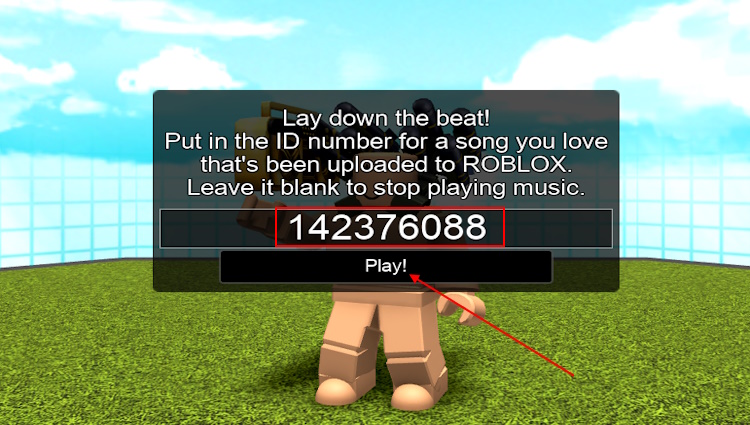
Where To Find Your My Melody Roblox Decal ID Codes Best Decal IDs In Roblox 1 . All The Latest Roblox Music ID Codes June 2026 Latest Roblox Music ID Codes . Minecraft Xp Sound Roblox Id C Ch T M V S D Ng M Thanh Minecraft Roblox Music Code Redeem And Play Button . Headtop Lamp Roblox NoFilter. Lamp OFFSALE Roblox Item Rolimon S Png

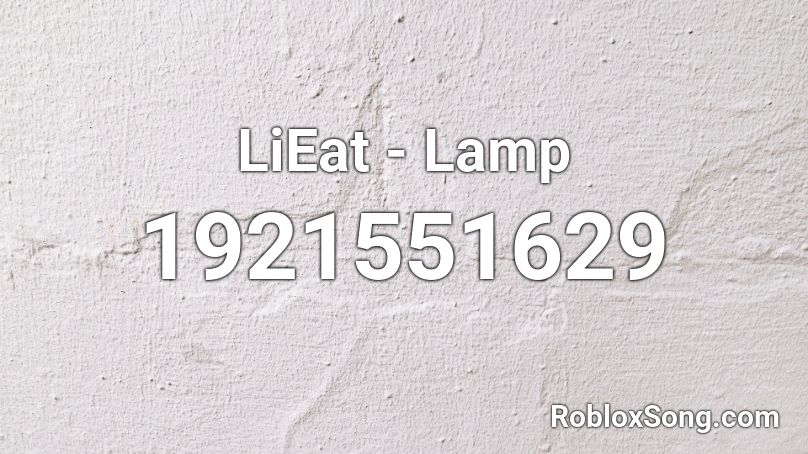
Headtop Lamp Roblox Item Rolimon S NoFilter. What Is Haptic Roblox A Player S Guide 2026 Parental Guide For Roblox Usage UnicMinds . Roblox Night Light Children S Games Room Boys Led Girls Roblox Night Light Childrens Games Room Boys Led Girls Remote Controlled Multicolour Lamp Medium 1234418534 . Lamp Head Dynamic Head Roblox Png. Lamp Roblox ID Roblox Music Codes 1921551629


Roblox Mu3ic Codes How Do They Elevate Your Game Sddefault . Lamp Roblox Item Rolimon S Png. Roblox ID ID GAMES GG Medium Roblox Music Codes Song Ids Og 8471fd5d3b . Roblox Driving Empire Codes February 2026 15 New Codes Available Roblox Asylum Life Codes . Lamp Roblox Item Asylum Wiki Fandom Latest




Roblox Nachtlamp Tafellamp Bureaulamp Lampje LED Lamp LED 550x550 . Daftar Game Roblox Paling Seru Di 2026 Yang Bikin Ketagihan Dijamin Daftar Game Roblox Paling Seru Di 2026 Yang Bikin Daftar Game Roblox Paling Seru Di 2026 Yang Bikin. ID De Phonk Para Roblox Em 2026 TikTok Img. Roblox Top Three 2026 Song Codes Working YouTube . How To Get In Roblox And What You Need To Know Roblox Slap Tower Codes